

Are Embroidered Wedding Linens Worth It?
Last Updated: November 4, 2026
Quick Summary
Embroidered table linens are worth it when they match your wedding theme and are made from a fabric that holds stitching well. Pick one or two anchor pieces, such as a tablecloth or napkins, and let the rest of the table follow. Choose a linen-cotton blend for the best balance of look and durability.
- Match thread color to your florals, not just your wall color.
- Our most popular napkins use a 55% linen and 45% cotton blend.
- Pre-wash linens to prevent shrinkage that can distort embroidery.
- Measure diameter and table height, then add twice the drop you want.
- Test your palette in both daylight and candlelight before ordering.
Table of Contents
- Matching Embroidered Table Linens to Your Wedding Theme
- Selecting the Right Fabric for Embroidered Linens
- Wedding Tablecloth Colors and Palette Coordination
- Wedding Tablecloth Sizes for Round Tables
- Embroidered Wedding Napkins and How They Pair With Tablecloths
- How to Care for Embroidered Linens Before and After the Big Day
- Buy or Rent: Budgeting and Next Steps for Your Wedding Linens
- Frequently Asked Questions
Matching Embroidered Table Linens to Your Wedding Theme
At Embroidery Studio Plus, we see embroidered table linens chosen for weddings more than almost anything else in our studio. The right pieces can make a reception feel personal, but only when they fit the theme you already have.
Start with the mood of the day. A romantic garden wedding calls for soft florals, such as the rose wreath monogram napkins in dusty rose, while a modern black-and-white event suits clean, minimal initials. Thread color matters as much as the design, so match it to your flowers, not just your wall color.

Many couples find it easier to pick one or two anchor pieces and let the rest of the table follow. A tablecloth in a neutral tone pairs well with a bolder napkin, and a runner can tie the whole look together.
Selecting the Right Fabric for Embroidered Linens
Fabric decides how the embroidery looks, how it photographs, and how long it survives the reception. A dense stitch pattern that reads beautifully on a crisp linen can look muddy on a soft cotton and can pucker on a stretchy blend. The fiber content of the ground cloth matters for how it holds embroidery, so it is worth checking alongside thread count.
Our most popular napkins use a 55% linen and 45% cotton blend, which feels soft but holds its shape through regular use. Here is how the common options compare when embroidery is part of the picture:
- Linen: crisp drape and natural texture; the slubs in the weave can interrupt fine lettering, so bold monograms and floral motifs read better than tiny serif initials. Wrinkles show more, which matters for long receptions.
- Cotton: softer hand and easier care; holds embroidery cleanly but has slightly less structure, so a large centerpiece design can pull the napkin out of shape.
- Blends: often the best balance of look, feel and durability; a linen-cotton blend resists the worst wrinkling of pure linen while keeping enough body for dense stitching.
- Satin: glossy finish that works for formal evening events, but the smooth surface shows stains and needle marks more, and heavy embroidery can weigh down the drape.
- Polyester and synthetic blends: budget-friendly and wrinkle-resistant, but they can pill around dense stitching and tend to hold static and odor; they are common in rental stock for exactly that reason.
Ask the seller for the exact fiber content before you order.
Lighting changes how embroidery looks, so test a swatch under the lighting your reception will use before you order the full set.
Watch out: a fabric that looks luxurious in a showroom can fail on the day if it has not been pre-washed, shrinkage after the first wash can distort embroidery and change the drop length of a tablecloth.
The article compares common fabric options for embroidered linens, with the main trade-offs for each.
| Fabric | Strength for embroidery | Trade-off |
|---|---|---|
| Linen | Bold monograms and florals read well | Slubs can interrupt fine lettering; wrinkles show |
| Cotton | Holds embroidery cleanly | Less structure; large designs can pull shape |
| Blends | Good balance of look and durability | Often the best all-round choice |
| Satin | Glossy finish for formal events | Shows stains and needle marks more |
| Polyester blends | Budget-friendly and wrinkle-resistant | Can pill around dense stitching |
Wedding Tablecloth Colors and Palette Coordination
Color is where most couples feel unsure. A simple rule helps: choose one base color for the tablecloth, one accent for the napkins, and one thread color that appears in your florals.
Ivory and white are safe bases that let embroidery stand out. Blush, sage and dusty blue add warmth without overwhelming the flowers. Avoid placing very bright linens next to bright centerpieces, because the colors compete.
Test your palette in daylight and in candlelight before you order. Colors often look different once the lights are low.
Wedding Tablecloth Sizes for Round Tables
Round tables need a tablecloth that drops evenly on all sides, and the math is simpler than it looks. Measure the table's diameter and its height from floor to tabletop, then add twice the drop you want to the diameter. A 60-inch round banquet table that stands 30 inches high, dressed with a 30-inch floor-length drop, needs a cloth of 60 + 30 + 30 = 120 inches.
Monogrammed Linen Dinner Napkins Set of 2, Hemstitched Rose Wreath design →
Drop length is the distance the cloth hangs below the table edge. A 12 to 18 inch drop looks tidy for most receptions and keeps chairs from catching the hem. A 30-inch drop reaches the floor and suits formal, floor-length styling, but it also collects every scuff and spilled drink. Measure your table height and diameter before ordering. Mistakes here are the most common reason for returns, and custom-embroidered cloths are usually non-returnable once monogrammed.
**
Watch out: ordering a floor-length cloth without accounting for a table topper, charger plates, or a thick pad can leave the hem short on one side, measure with the table dressed as it will be on the day.
Embroidered Wedding Napkins and How They Pair With Tablecloths
Napkins should complement the tablecloth, not match it exactly. A white tablecloth pairs well with napkins that carry colored embroidery, such as the embroidered peonies linen napkins set of two at $42.00.
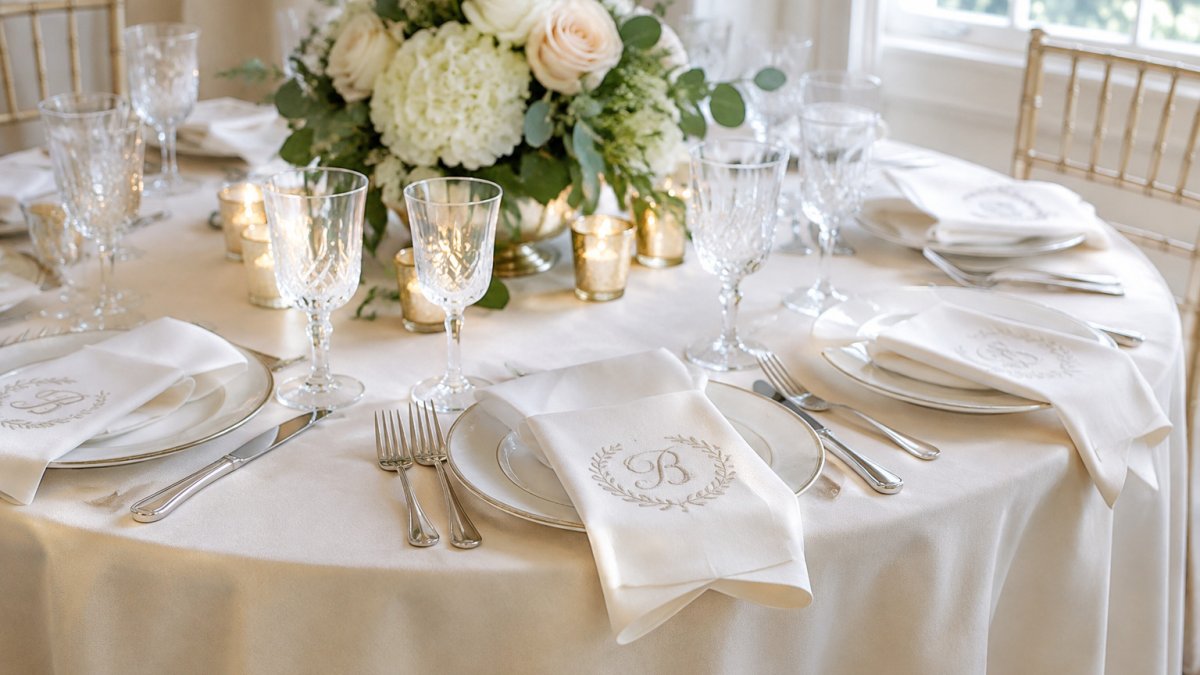
For a more personal touch, the monogrammed linen dinner napkins with a rose wreath design work well at wedding tables, and can be personalized with an initial. If you want to give them as gifts, read how to choose monogrammed linen napkins as a wedding gift before you buy.
Our rule of thumb: if the tablecloth is busy, keep the napkins simple. If the cloth is plain, let the napkins carry the detail.
How to Care for Embroidered Linens Before and After the Big Day
Embroidery lasts longer with gentle care. Follow these steps:
- Read the care label before washing.
- Machine wash on a gentle cycle, in cold water.
- Tumble dry on low, or line dry.
- Iron on low heat, and iron the reverse side when possible.
- Store flat or loosely rolled, away from direct sunlight.
Wash linens before the wedding if they arrive wrinkled from packaging. Keep them stored in a dry place until the day. For a deeper guide, see how to maintain embroidered linens and how to make monogrammed bed sheets last for years.
Buy or Rent: Budgeting and Next Steps for Your Wedding Linens
Buying gives you pieces you can use again for dinners, showers and anniversaries. Renting costs less upfront but leaves you with no keepsakes.
Set a budget first, then decide which items matter most. Start with the pieces people see up close, like napkins, and then choose the tablecloth to match.
When you are ready, browse our Heirloom Roses table runner to see how a coordinating piece can finish your table. Subscribe to our emails to hear about new embroidery collections and seasonal styling ideas.

Frequently Asked Questions
How do you choose table linens for a wedding?
Start with your venue and theme, then pick a fabric and color that fit both. Linen-cotton blends like the 55% linen and 45% cotton napkins in the Embroidery Studio Plus catalog hold their shape well and look refined under warm lighting. Match the thread color of your monogram to your palette so the embroidery reads as intentional rather than decorative. Order one sample napkin before committing to a full set of tablecloths, since color often looks different in person than on screen.
Should wedding tablecloths be white or ivory?
White reads crisp and bright and suits daytime or modern venues, while ivory softens under candlelight and pairs well with warm metals and florals. If your embroidery uses a colored thread, such as the dusty rose wreath design, a cream or ivory base often lets the thread stand out more gracefully than stark white. Check how your photographer's lighting will affect the tone before you decide, because venue lighting can shift white toward yellow.
How do you care for embroidered linens after a wedding?
Machine wash embroidered linen napkins on a gentle cycle, then tumble dry on low or line dry to protect the stitching. Turn pieces inside out before washing to reduce friction on the embroidery, and avoid bleach. Iron on low heat, ideally on the reverse side or over a towel, to keep the monogram raised and the hemstitch crisp. Store flat or loosely rolled rather than folded tightly so creases do not set into the fabric over time.
Is it better to rent or buy wedding table linens?
Renting suits couples who need a large quantity for a single event and do not plan to reuse the pieces. Buying makes sense when the embroidery carries personal meaning, such as initials or a monogram, because those pieces can become keepsakes or be used at future family gatherings. Compare the total rental cost against a purchase of a coordinated set, which for the Embroidery Studio Plus napkins is $42.00 for a set of two.
