

Luxury Linens vs Mass Produced Sheets: Which Lasts Longer
Last Updated: October 30, 2026
Quick Summary
Luxury linens last longer because they are made from long-staple Egyptian or Pima cotton, woven at an honest 600 thread count, and finished with stitched details that survive repeated washing. Mass-produced sheets use shorter fibers and inflated thread counts, and typically pill within one to two years.
- A genuine 600 thread count woven from long-staple cotton outlasts a 1,000 count sheet inflated with multi-ply yarn.
- Luxury linens run from $138 for a monogrammed 600 TC set up to $485 for embroidered Vintage Roses sheets.
- Mass-produced sets often cost under $60 but last only one to two years before pilling.
- Wash luxury bedding in cool water, skip harsh detergents, and dry on low or line dry.
- Custom embroidered sheets cannot be matched by mass production, which prints or glues on detail instead of stitching it.
Table of Contents
- Luxury Linens vs Mass Produced: The Real Differences at a Glance
- Sheet Thread Count Explained: Why 600 TC Luxury Sheets Beat 1,000 TC Bargains
- The Best Fabric for Bed Sheets: Egyptian Cotton, Pima, and What Cheap Blends Hide
- Pros and Cons of Luxury Linens: What $138 to $485 Actually Buys You
- Pros and Cons of Mass-Produced Linens: Where the Savings Come From
- Custom Embroidered Bed Sheets: The Personalization Mass Production Can't Match
- How to Care for Luxury Bedding So It Outlasts Cheap Sheets
- Choosing Your First Set of Monogrammed Sheets
- Frequently Asked Questions
Luxury Linens vs Mass Produced: The Real Differences at a Glance
The luxury linens vs mass produced debate comes down to one number: how many washes the sheets survive before they pill, thin, or lose their drape. Embroidery Studio Plus has spent over six years embroidering bedding for customers who want their sheets to outlast trends, and the difference between a well-made set and a bargain set shows up long after the price tag is forgotten.
Luxury linens are bedding made from long-staple cotton, woven at a moderate thread count, and finished with details like embroidery, scalloped borders, or lace trim that survive repeated washing. Mass-produced sheets are built to hit a price point, which usually means shorter cotton fibers, looser weaves, and decorative touches that fade or fray within a year.
Here is the short version before we break down each factor:
| Factor | Luxury Linens | Mass-Produced Linens |
|---|---|---|
| Fiber | Long-staple Egyptian or Pima cotton | Shorter cotton, often blended |
| Thread count | Honest 600 TC, well woven | Inflated counts from multi-ply yarn |
| Finish | Embroidery, scalloped borders, lace trim | Printed or glued-on detail |
| Lifespan | Years of regular washing | One to two years before pilling |
| Price | $138 to $485 per set | Often under $60 |
The rest of this comparison explains what each row actually means in practice, so you can decide where the extra money goes and whether it is worth it for your bedroom.
Sheet Thread Count Explained: Why 600 TC Luxury Sheets Beat 1,000 TC Bargains
Thread count is the number of threads woven into one square inch of fabric, but that number is the least reliable signal on the package. A genuine 600 thread count woven from long-staple cotton feels smoother and lasts longer than a "1,000 count" sheet made by twisting multi-ply yarns together to inflate the figure.
What most guides miss is how the inflation works. Manufacturers count each ply of a twisted yarn as a separate thread, so a 250-count fabric made with four-ply yarn gets labeled 1,000. The sheet is heavier and coarser, not finer. A well-woven 600 TC sateen, like the ones we finish with custom embroidery, gives you a silky hand and breathable weight without the stiffness that comes from cramming too many threads into a loom.
If you want to see what a 600 TC sateen feels like before committing, you can shop our 600 thread count Egyptian cotton sheet set.

The Best Fabric for Bed Sheets: Egyptian Cotton, Pima, and What Cheap Blends Hide
Long-staple cotton is a popular choice for bed sheets, and the two names worth knowing are Egyptian cotton and Pima cotton. Both produce a longer fiber.
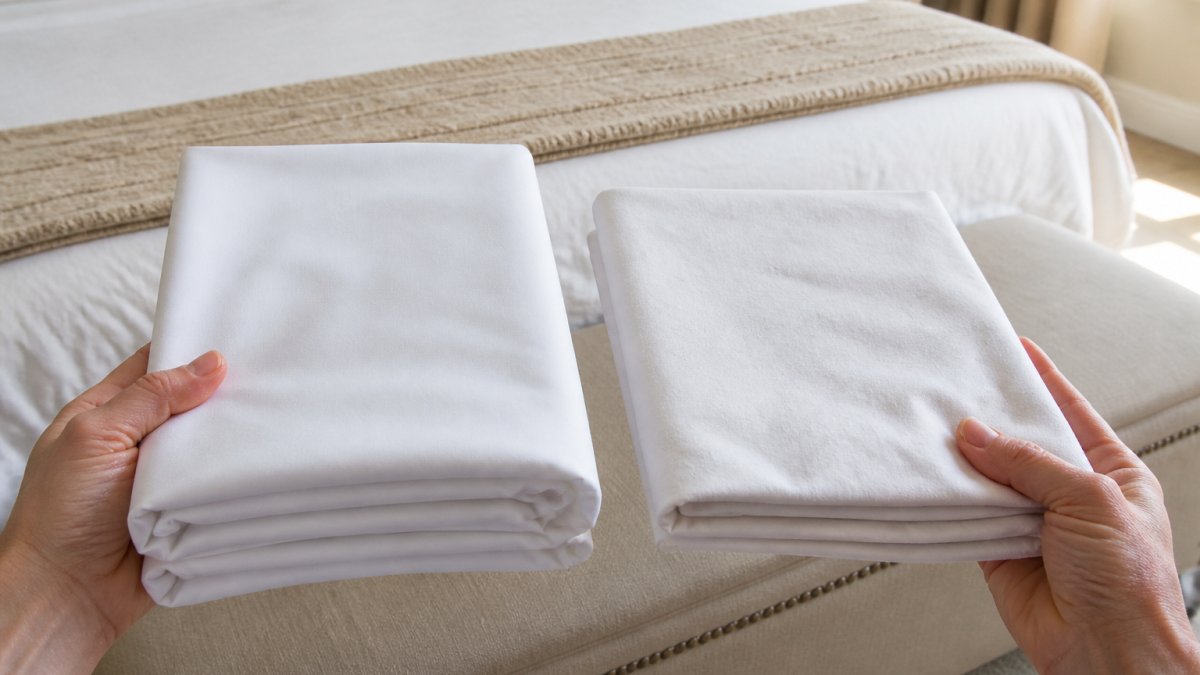
Cheap blends hide their weaknesses in the label. A sheet marked "cotton-rich" may contain a modest share of cotton mixed with polyester, which feels cool at first and then traps heat overnight. Microfiber, meanwhile, is synthetic and tends to pill where your feet and elbows rub. Neither is dishonest, but neither behaves like long-staple cotton after a year of washing.
Pima cotton is the fiber behind our 600 thread count Pima cotton sheet set with jasmine vine embroidery. For a plain-language explanation of how fiber length affects durability, the Cotton Incorporated fiber quality guide is a useful reference.

Pros and Cons of Luxury Linens: What $138 to $485 Actually Buys You
Luxury linens cost more because the materials and the finishing cost more, and the pros and cons reflect that trade-off honestly.
Pros:
- Long-staple cotton is used in many of our sets
- Custom embroidery and scalloped borders add a personal, heirloom-quality detail
- A set can be kept for many nights of use
Cons:
Luxury Monogrammed Egyptian Cotton Bed Sheet Set -600 Thread Count with Custom →
- Higher upfront price, from $138 for a monogrammed 600 TC set up to $485 for embroidered Vintage Roses sheets
- Personalization means longer lead times than grabbing a box off a shelf
- Some care is required to protect the embroidery and the weave
If you are weighing the full value case, our guide on whether luxury bedding is worth it walks through the math in more detail.
Pros and Cons of Mass-Produced Linens: Where the Savings Come From
Mass-produced linens save money in three places: fiber, finishing, and volume. Shorter cotton fibers and poly blends cost less per yard, printed or glued decoration replaces stitched detail, and enormous production runs spread fixed costs thin.
Custom Embroidered Bed Sheets: The Personalization Mass Production Can't Match
Custom embroidered bed sheets are the clearest dividing line in this comparison. Mass production can print a pattern, but it cannot stitch your initials in a thread color you chose to match your bedroom, and it cannot finish the edge with a coordinated scalloped border.
Custom monogrammed sets are embroidered to order, and the personalization turns bedding into a gift that carries meaning, whether for a wedding, a housewarming, or a faith-inspired home.
How to Care for Luxury Bedding So It Outlasts Cheap Sheets
How to care for luxury bedding comes down to three habits: wash in cool water, skip harsh detergents, and dry on low or line dry. Those habits protect both the cotton weave and the embroidery, and they are the reason a good set can outlast three cheap ones.
Follow the care label on your set. Wash linens separately or with light items, and avoid zippers, hooks, and heavy towels that can snag embroidery.
For a fuller routine, our guide on how to make monogrammed bed sheets last for years covers stain handling and seasonal storage in detail.
Choosing Your First Set of Monogrammed Sheets
Start with the fabric and the size, then choose the personalization. If you sleep warm, a 600 TC sateen in Egyptian or Pima cotton gives you breathability with a smooth finish. If the set is a gift, pick a classic monogram style and a neutral thread color that suits most bedrooms.
Here is how we would decide:
- Everyday luxury: a 600 TC monogrammed set in your choice of thread color
- A wedding or anniversary gift: an embroidered set with a scalloped border
- A faith-inspired home: embroidered "Blessed" sheets with custom thread color
- A romantic, vintage bedroom: embroidered floral sheets with lace trim
Frequently Asked Questions
What is the difference between luxury linens and mass-produced bedding?
The gap shows up in the fiber, the weave, and the finishing. Luxury linens typically use long-staple cotton such as Egyptian or Pima in a 600 thread count sateen weave, with embroidery and trim done piece by piece. Mass-produced bedding often uses shorter fibers, blended fabrics, and chemical finishes to fake softness.
Does a higher thread count always mean better-quality sheets?
No. Thread count explained simply is the number of threads woven per square inch, but manufacturers can inflate it by counting multi-ply yarns as separate threads. A genuine 600 thread count long-staple cotton sheet usually feels smoother and lasts longer than a claimed 1,000 thread count sheet made from short fibers. Look at the fiber type and weave alongside the number.
Do luxury linens last longer than inexpensive sheets?
Fiber length and weave both affect how a sheet wears over time. Fabric weight, stitching, and how you launder the sheets all affect how long either option survives.
How should you care for luxury bedding to make it last?
Follow the care label on embroidered sheets in particular, since care instructions are printed on each set.
If you are ready to stop replacing sheets every year, Embroidery Studio Plus can help. Our family-founded studio offers handcrafted custom monogramming, premium 600 thread count cotton, and embroidered details made to your specifications, with over six years of experience behind every set. Get started with Embroidery Studio Plus and bring personal, lasting elegance to your bedroom.
